Blog
Madagascar Vanilla Powder: Uses in the Kitchen and Beyond
Ask most people what vanilla powder is for, and they’ll say baking. That’s fair — but it’s only the start. Because vanilla powder is made differently from extract, it can do things a bottle of extract simply can’t: go straight into a dry cake mix without adding liquid, get whisked into melted chocolate without seizing it, or sit in a jar of bath salts for months without breaking down. It’s one of those ingredients that quietly does more once you know what it’s capable of.
Here’s a closer look at what Madagascar vanilla powder actually is, how it’s different from extract, and the many ways to put a jar of it to use.
What Is Vanilla Powder, Exactly?
Vanilla powder is made by drying whole vanilla pods — seeds and all — and grinding them into a fine powder. There’s no carrier liquid, no water, and no dilution involved, which is what sets it apart from vanilla extract (a liquid infusion) and vanilla paste (a thicker blend of extract and scraped seeds).
Because it’s made from the whole pod, vanilla powder carries a more concentrated, rounded vanilla flavor — closer to what you’d get from scraping a fresh bean. And because it’s completely dry, it behaves more like a spice than a liquid flavoring, which opens up uses that extract can’t cover.
Why Vanilla Powder Behaves Differently From Extract
A few practical differences matter more than they might seem:
- Nothing to cook off. Extract’s flavor is carried in a liquid base, which can evaporate and dull the taste at high oven temperatures. Powder holds its flavor through baking and even light roasting.
- No moisture added. A teaspoon of extract adds liquid to a recipe; a teaspoon of powder doesn’t. That matters in anything where extra moisture would throw off the texture — dry spice mixes, chocolate work, meringues, and delicate batters.
- More concentrated per gram. Because it’s the whole pod rather than an extraction, a little goes further — good news for recipes (and skin or home products) where you don’t want to add much volume.
In the Kitchen
Baking and dry mixes. This is where vanilla powder is genuinely better suited than extract. Whisk it directly into pancake mix, cookie dough, cake batter, or pastry dough before any liquid goes in, and you get even flavor distribution with zero risk of it evaporating in the oven. It’s also the better choice for recipes baked at high heat, like biscotti or shortbread.
Chocolate and confections. Melted chocolate seizes the moment it meets liquid, which rules out extract for tempering or dipping. Vanilla powder can be blended straight into melted chocolate, ganache, or truffle centers without any risk of that happening.
Frostings, whipped cream, and custards. Powder dissolves into fat and sugar without thinning them out, so buttercream stays stiff enough to pipe and whipped cream holds its peaks. It’s a small difference, but it shows in the final texture.
Coffee, smoothies, and shakes. A pinch stirred straight into coffee grounds before brewing, or blended into a smoothie or protein shake, adds flavor without watering down the drink — something extract can’t do in a cold or blended drink.
Sugar and spice blends. Because it’s completely dry, vanilla powder can be mixed straight into sugar (for a simple vanilla sugar), cinnamon-sugar blends, granola, or spice rubs for desserts, without clumping.
Substitution tip: as a rough guide, ¼ to ½ teaspoon of vanilla powder is roughly equivalent to 1 teaspoon of standard vanilla extract, though this varies by brand strength — start on the lower end and adjust to taste.
Beyond the Kitchen
Vanilla’s warm, comforting scent and skin-friendly reputation are exactly why it shows up so often in beauty and home products — and powder, being dry and shelf-stable, is easier to work into DIY versions of these than extract is.
DIY skincare. Vanilla powder is a common addition to homemade sugar scrubs, bath salts, and body butters, where its scent and fine texture blend in without adding liquid that could destabilize the mixture. It’s often paired with shea butter, coconut oil, or honey in simple at-home recipes.
Soap and candle making. As a natural scenting alternative to synthetic fragrance oils, a small amount of vanilla powder added to melt-and-pour soap base or candle wax lends a warm, natural note without the moisture issues liquid extracts can cause in these projects.
Home fragrance. A little vanilla powder simmered on the stovetop with water and cinnamon or citrus peel makes a simple natural room freshener — a low-effort alternative to store-bought air fresheners.
Aromatherapy and relaxation. Vanilla’s scent is widely associated with comfort and calm, which is why it turns up so often in diffuser blends, bath products, and candles marketed for winding down in the evening.
How Much Do You Actually Need?
Because it’s concentrated and completely dry, vanilla powder tends to last a long time in normal kitchen use — a 50g jar covers a lot of recipes when you’re working in quarter-teaspoons. Store it in an airtight container away from heat and direct light, and it holds its aroma well over time.
FAQs
Is vanilla powder the same as ground vanilla beans?
Essentially, yes — pure vanilla powder is just finely ground, dried whole vanilla pods, with nothing added.
Can I use vanilla powder in cold drinks and no-bake recipes?
Yes. It dissolves less completely than extract in cold liquids, so it works best whisked or blended in rather than simply stirred, but it’s a good fit for smoothies, shakes, and no-bake bars.
Does vanilla powder go bad?
Kept dry and sealed, it stays good for a long time — much longer than an opened bottle of extract — since there’s no liquid to spoil.
Is it safe to use on skin?
Pure vanilla powder is generally used in small amounts in DIY beauty recipes, but as with any new ingredient, it’s worth doing a small patch test first, especially for anyone with sensitive skin.
A Note on Choosing Real Vanilla Powder
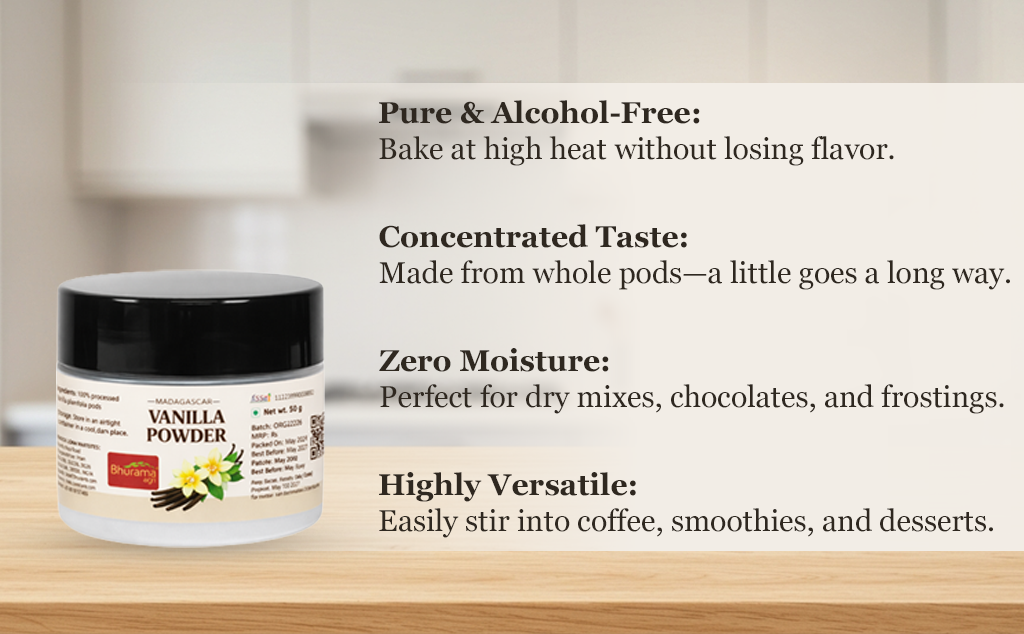
Not everything labeled “vanilla powder” on a shelf is the same thing — some blends are cut with sugar, maltodextrin, or other fillers. If what you’re after is the real thing, Bhurama agri’s Madagascar Vanilla Powder is made purely from whole Madagascar vanilla pods — pure and dry, so it holds its flavor through high-heat baking; concentrated, since it’s made from whole pods rather than a diluted extraction; completely moisture-free, which makes it a natural fit for dry mixes, chocolate, and frostings; and versatile enough to stir into coffee, smoothies, and desserts alike.
Whether you’re baking, dipping chocolate, or putting together a simple DIY body scrub, it’s one small jar that covers a surprising amount of ground.