
Uses of Vanilla Extract: Beyond Just Baking
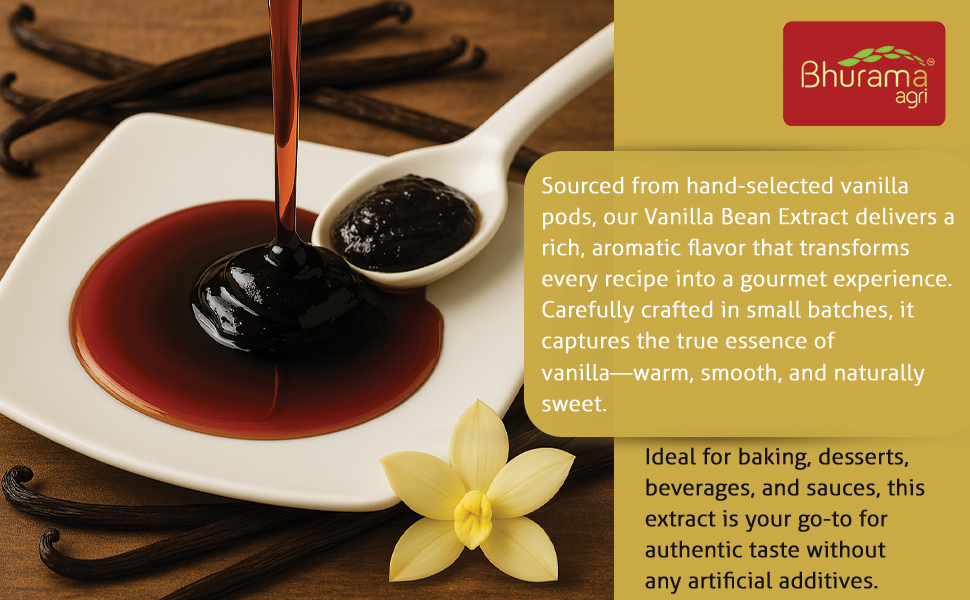
Most people reach for vanilla extract only when a recipe calls for it in a cake or cookie batter. But a good, pure extract is one of the most versatile bottles in your kitchen — and a few drops can do far more than round out a dessert. Here’s a full look at where vanilla extract, like Bhurama agri’s 5-Fold Vanilla Extract, actually earns its place.
What Makes an Extract “Pure”
Before the uses, a quick note on quality: pure vanilla extract is made by steeping real vanilla beans over weeks or months to pull out the natural flavour compounds. Bhurama agri’s extract is propylene glycol-based, which suits households looking for that option, and works well in drinks or dishes served to children. “Imitation vanilla,” by contrast, is usually synthetic vanillin dissolved in a base liquid — cheaper, but flatter and one-dimensional in flavour. A 5-fold extract, specifically, means the beans have been infused at five times the standard concentration — which is exactly what goes into Bhurama agri’s 5-Fold Vanilla Extract — giving a noticeably deeper, rounder flavour than a typical single-fold extract. The uses below all benefit from starting with something this concentrated.
In Baking (The Obvious One, Done Right)
- Cakes, cookies, and batters — added to wet ingredients before mixing, extract deepens and rounds out other flavours rather than standing on its own. It’s why “vanilla” recipes rarely taste like vanilla alone.
- Frostings and buttercreams — because there’s no baking step to mellow it, extract’s flavour comes through directly here, so quality matters even more than in a cake batter.
- Bread and enriched doughs — a small amount in brioche or milk bread adds warmth without a distinct vanilla flavour coming through.
In Drinks
- Coffee and lattes — a few drops of Bhurama agri’s 5-Fold Extract in your cup, or added to the milk before steaming, gives you a natural version of vanilla-flavoured coffee shop drinks without the syrup’s added sugar. Because it’s 5-fold, a couple of drops does the work of a much larger splash of standard extract.
- Hot chocolate and warm milk — a drop or two rounds out the bitterness of cocoa.
- Cocktails and mocktails — bartenders use vanilla extract in old fashioneds, eggnog, and cream-based cocktails for the same rounding effect it has in coffee.
- Smoothies — a small splash pairs particularly well with banana, oat milk, or protein smoothies, softening any chalky or bitter notes.
In Savory Cooking
This is the use most people skip entirely, but professional kitchens rely on it:
- Tomato-based sauces — a few drops in a simmering marinara or bolognese can round out acidity, similar to how a pinch of sugar works, but with more complexity.
- Glazes for meat — vanilla pairs surprisingly well with pork and duck glazes, adding warmth alongside honey, mustard, or citrus.
- Vinaigrettes — a drop in a citrus or fruit-based dressing adds roundness without making it taste like dessert.
Beyond the Kitchen
- Homemade candles and potpourri — a few drops on unscented candle wax or dried potpourri gives a natural, warm scent.
- Natural room deodorizer — a cotton ball with a few drops of extract placed in a cupboard, car, or fridge can neutralize odors with a mild, pleasant scent.
- Simmer pots — added to a pot of simmering water with cinnamon or citrus peel on the stove, it fills a room with a natural, cozy aroma — a good alternative to artificial air fresheners.
How Much to Use
Vanilla extract is potent — a little goes a long way, and with a 5-fold concentration like Bhurama agri’s, you can typically use even less than these baselines suggest:
- Baking (per standard recipe): 1–2 teaspoons is typical.
- Drinks (per cup): ¼–½ teaspoon.
- Savory dishes: start with just a few drops and taste before adding more — it’s easy to overdo in a savory context.
- Non-food uses: a few drops is enough; more doesn’t necessarily mean a stronger scent.
Storage Tips
Store your extract in a cool, dark cupboard, tightly sealed, away from direct heat or sunlight, and it will keep its flavour well — it doesn’t need refrigeration. Being propylene glycol-based, keeping the cap tightly sealed between uses is especially important to preserve aroma.
Frequently Asked Questions
Can I substitute vanilla extract for vanilla bean paste or powder?
Generally yes, 1:1 for paste. For powder, start with slightly less since it’s more concentrated and has no liquid to dilute the flavour, which matters in recipes sensitive to added moisture.
Does cooking vanilla extract “burn off” the flavour?
Extended high heat does reduce some of the aromatic compounds, which is why it’s often added toward the end of cooking or straight into batters rather than at the start of a long simmer.
Is 5-fold extract worth it over standard extract?
If you use vanilla often — in coffee, baking, and sauces — the deeper concentration means you often use less per use, and the flavour is noticeably rounder rather than one-note. This is exactly why Bhurama agri’s extract is made at 5-fold strength rather than standard single-fold.
Can vanilla extract go bad?
A well-sealed, properly stored extract keeps its quality for a long time, though flavour intensity can fade slowly over time if the cap isn’t kept tight or the bottle is exposed to heat or light.
What makes a propylene glycol-based extract different in recipes?
Not much in how you use it — measure and substitute it the same way you would any vanilla extract. It works well in drinks or dishes served straight, like a simmer pot or a splash in warm milk.
Bhurama agri’s 5-fold vanilla bean extract is made the traditional way — real beans, real steeping time, no shortcuts — so whether you’re using it in a cake, a coffee, or a simmer pot, you’re getting the full flavour. If you’d rather work with whole pods or paste, those are available too.